
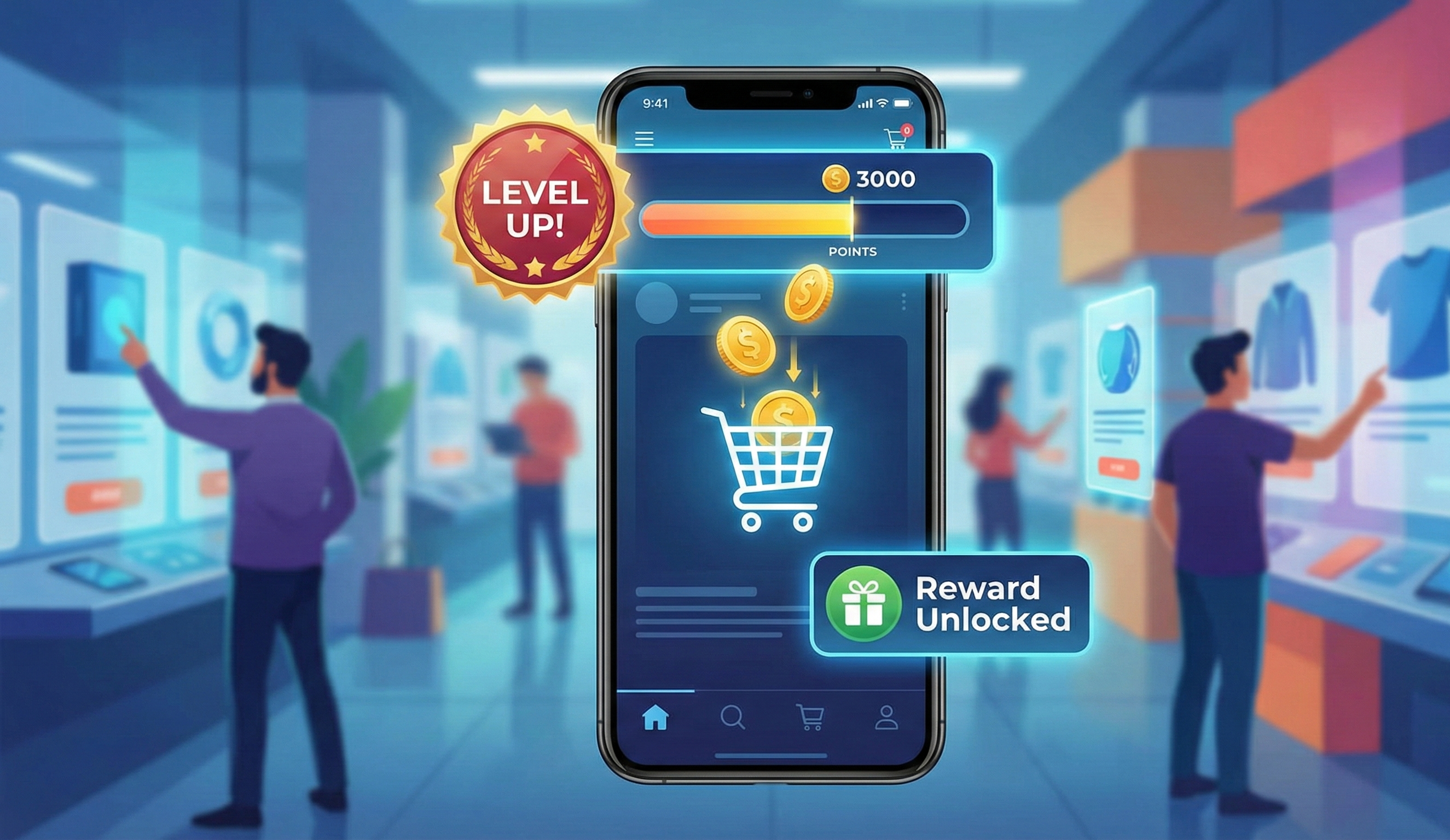
In 2025, gamification is expected to generate US$32 billion in sales revenue, and it’s no wonder why 70% of e-commerce companies are already using it to boost their customer experience. In a competitive digital marketplace, brands can no longer afford to offer a purely transactional journey. By integrating game-like features into the shopping process, you can transform mundane interactions into interactive and rewarding adventures that capture customer attention and build lasting loyalty.
This article will explore what e-commerce gamification is, break down the most effective techniques, and showcase how leading brands are using these strategies to drive significant growth and achieve competitive differentiation.
What is E-commerce Gamification?
E-commerce gamification is the art of incorporating game design elements and mechanics into non-game contexts, such as an online store. The goal is to make the shopping experience more engaging, enjoyable, and memorable. By tapping into fundamental human drivers for achievement, competition, and reward, gamification turns routine interactions like browsing products or making a purchase into exciting and satisfying experiences that build retention loops and increase customer lifetime value (CLV).
Effective e-commerce gamification relies on a set of proven techniques, each designed to tap into specific psychological triggers that motivate customer behavior and drive commercial goals.
Popular gamification techniques for e-commerce apps include:
- Loyalty and Rewards Programs
- Spin-to-Win and Other Chance-Based Games
- Quizzes and Personalization
- Challenges and Competitions
- Progress Visualization
Loyalty programs are a cornerstone of gamification, rewarding customers for specific actions like making purchases, reviewing products, or referring new clients. Chance-based games offer shoppers the thrill of winning instant incentives. Quizzes provide a powerful way to deliver personalized product recommendations while collecting valuable customer data. Challenges and competitions are excellent tools for encouraging user participation and generating social proof. Progress visualizations motivate customers to complete a specific goal by showing them how close they are to achieving it.
Real-World Examples of Gamification in e-commerce brands
Many of the world’s most successful e-commerce brands are already leveraging gamification to create more compelling customer journeys. These examples show the versatility and strategic impact of a well-executed gamification strategy.
- Starbucks: The Starbucks Rewards program is a masterclass in using a points system to drive retention. Customers earn Stars on every purchase, which can be redeemed for free items. The app also features personalized challenges, creating a powerful sense of progression that transforms transactional coffee buying into an engaging habit.

Customers earn Stars on every purchase, which can be redeemed for free items
- Farfetch: The “Access Rewards” program is a premier example of a tiered loyalty system, motivating customers to climb five levels from bronze to private client. By tying escalating rewards like personal stylists to purchasing milestones, Farfetch gamifies luxury consumption and fosters long-term loyalty among high-value customers.

Farfetch has a tiered loyalty system from bronze to private client
- KENZO: To promote a limited-edition sneaker, the fashion brand launched the “Shopping League,” a multiplayer online game where users competed in one-on-one duels to win the right to purchase the exclusive product. This campaign masterfully used scarcity and competition to generate immense desirability and organic PR, proving that gamification can be a powerful product launch strategy.

KENZO use a multiplayer online game to generate immense desirability and organic PR
- Shein: The fast-fashion giant uses a comprehensive points system where users earn rewards for daily check-ins, product reviews, and outfit contests. These points translate into significant discounts, creating a powerful cycle of engagement and purchasing that has been instrumental to its rapid growth.

Shein gamifies daily check-ins, product reviews, and outfit contests
- AliExpress: The global marketplace has integrated mini-games directly into its platform, where users earn digital coins that function as in-app currency. This strategy increases time-in-app and keeps users engaged with the brand even when they aren’t actively shopping.

Ali Express integrates mini-games directly into its platform
- Charlotte Tilbury: The makeup brand uses a 3D avatar to guide users through immersive virtual worlds and shoppable 3D spaces. This innovative approach blurs the line between gaming and retail, creating a highly engaging and futuristic shopping experience that offers a distinct competitive advantage.

Charlotte Tilbury uses a 3D avatar to guide users through immersive virtual worlds and shoppable 3D spaces
- Studio Shed: This company offers a virtual reality design tool that allows customers to build and customize their own shed models. By turning the design process into an interactive and personal game, Studio Shed reduces purchase uncertainty and empowers customers, streamlining the path to conversion for a high-consideration product.

Studio Shed offers a virtual reality design tool that allows customers to build and customize their own shed models
The Benefits of Gamifying Your E-commerce Experience
When implemented strategically, gamification provides tangible benefits and a strong return on investment for e-commerce brands.
Increased Customer Engagement
Game-like elements and interactive experiences add value to the customer journey, keeping users on your website or app for longer periods and increasing the frequency of their interactions.
Improved Customer Loyalty
By offering rewards, achievements, and a sense of progression, gamification makes customers feel more invested in the platform, creating emotional connections that encourage repeat purchases and increase CLV.
Boosted Sales Revenue
Gamification has been shown to increase conversion rates, average order value, and customer lifetime value. For example, targeted game mechanics like spin-to-win widgets have been shown to increase conversions by up to 7x compared to standard pop-ups.
Enhanced Brand Awareness
Shareable achievements, social media contests, and referral challenges encourage word-of-mouth marketing and can lead to powerful and cost-effective organic user acquisition.
Valuable Data Collection
Interactive elements like quizzes and personalized challenges provide valuable insights into customer preferences and behaviors. This allows brands to move beyond broad demographic targeting and segment audiences based on nuanced psychographic profiles and stated preferences, leading to more resonant and effective marketing.
Conclusion: The Future is Playful and Strategic
Gamification is far more than a passing trend; it is a powerful, long-term strategy for e-commerce platforms looking to deepen customer engagement and build unshakable loyalty. By transforming the shopping experience into something more interactive and rewarding, brands can differentiate themselves in a crowded market and create more meaningful connections with their audience.
Looking ahead, the future of gamification will be driven by emerging technologies like Augmented Reality (AR), Virtual Reality (VR), and Artificial Intelligence (AI). These technologies will not just enhance existing strategies; they will enable hyper-personalized, dynamically adaptive gamified experiences, making a sophisticated approach to gamification an essential — not optional — component for any e-commerce business aiming to dominate the future of digital retail.
Implementing the strategies discussed in this article, particularly a robust loyalty and rewards program, is a critical step toward unlocking sustainable growth. For Shopify merchants ready to transform their customer experience, having the right tools is essential.
To Find out how Adjust can measure your gamification wins and drive growth for your e-commerce brand, go visit our app