
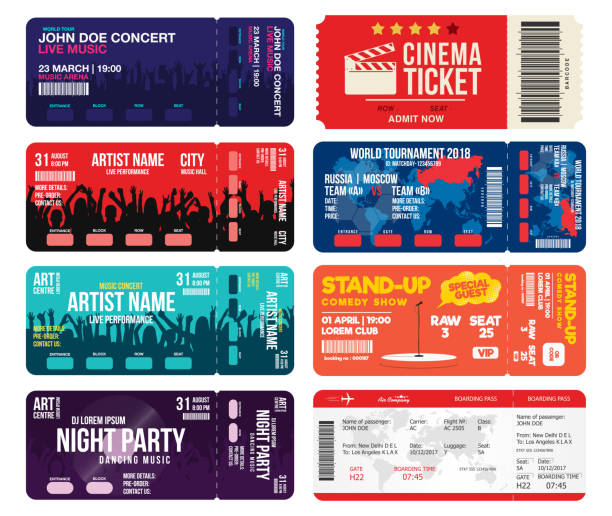
Chapter 1: Macro Background & DTC Transformation: Reshaping the Digital Infrastructure of the Experience Economy
In the current global economic landscape, despite inflationary pressures and supply chain fluctuations, the Arts & Entertainment industry—specifically the Event Tickets segment—is demonstrating a remarkable resilience that seemingly defies economic cycles. As a senior e-commerce analyst and DTC brand marketing expert, we observe a profound structural shift in this market: a transition from traditional sales models dominated by third-party giants to a Direct-to-Consumer (DTC) model centered around the brand. This report delves into the drivers behind this transformation, specifically how Loyalty Programs are becoming the core weapon for DTC brands to break through in the fierce "war for attention."
1.1 The Resilience of the Experience Economy and the "Funflation" Phenomenon
Between 2024 and 2025, the most defining characteristic of the global ticketing market is the coexistence of "Funflation" and robust consumer demand. This is not merely a matter of rising prices, but a deep shift in consumer values. According to industry trend reports by Klaviyo, although 71% of ticketing providers raised prices in 2024, 47% of consumers still expect to maintain their spending on event tickets, with 30% planning to increase it.1 This data powerfully proves that consumer price sensitivity for "experiences" is far lower than for physical goods (such as health and beauty products). In the post-pandemic era, the craving for live connection, resonance, and collective memory has turned concerts, music festivals, and theater performances into "essential needs" rather than optional luxuries.
However, this prosperity is not evenly distributed. Market growth is primarily driven by mobile channels and premium experiences. Data indicates that by 2025, mobile channels will account for 58.40% of the online event ticketing market, and the Compound Annual Growth Rate (CAGR) for VIP and premium packages will reach 4.51%, far outpacing general ticketing.2 For DTC brands, this means that simply offering an "entry pass" is no longer sufficient for survival in an increasingly crowded market. Consumers are buying not just permission to enter a venue, but a comprehensive experience that begins the moment they purchase the ticket and continues through the event and beyond.
1.2 From Ticketmaster to Shopify: The Logic Behind the Rise of DTC Ticketing
For a long time, third-party platforms like Ticketmaster and Eventbrite have dominated the ticketing market. However, the drawbacks of this model are becoming increasingly apparent: high service fees, data opacity, and a disconnect between brands and fans. Brands cannot access core user data (such as emails, preferences, historical behavior), leaving them unable to conduct secondary marketing and reliant on platform traffic distribution, trapping them in a cycle of high Customer Acquisition Costs (CAC).
With the maturation of e-commerce infrastructure like Shopify and specialized plugins like Evey Events & Tickets and Event Ticketing, an increasing number of artists, independent music festivals, and theaters are building their own DTC ticketing systems. This shift is not just about saving on commissions; it is about Data Sovereignty. Through the DTC model, brands can:
- Directly Own Customer Relationships: Capture First-party Data and even Zero-party Data to understand who the true super-fans are.
- Build Omnichannel Experiences: Seamlessly integrate ticket sales with merchandise (Merch), digital downloads, and fan club memberships.
- Implement Customized Loyalty Programs: Break free from generic platform point systems and design "loyalty rewards" mechanisms that align with the brand's tone.
1.3 2026 Outlook: The AI-Driven Retention Revolution
Looking ahead to 2026, a simple DTC transformation will no longer be enough to establish a competitive edge. With the explosion of AI technology, loyalty programs will shift from "transactional" to "predictive" and "emotional." AI customer retention will become the new industry standard. Brands will no longer passively wait for users to churn before attempting to win them back; instead, they will use AI to predict churn probabilities and intervene with hyper-personalized content and incentives before the user even considers leaving. The emergence of next-generation tools like RIJOY AI embodies this trend, encapsulating complex AI capabilities into user-friendly applications, enabling even small and mid-sized event organizers to possess retention capabilities comparable to tech giants.
Chapter 2: Deep Dive: Customer Behavior & Loyalty Pain Points
Before designing any solution, we must conduct a microscopic examination of the customer behavior characteristics specific to the arts-and-entertainment > event-tickets category. Unlike the FMCG or fashion industries, the ticketing industry has extremely unique consumption rhythms and psychological drivers.
2.1 "One-and-Done": Low Frequency Consumption and High Churn Risk
The biggest challenge in the ticketing industry is the naturally low frequency of purchases. Unless they are subscribers to a theater or die-hard sports fans, most consumers attend only 1-2 events of a specific type per year. This "One-and-Done" consumption model leads to extremely high nominal churn rates. If a brand cannot maintain a connection with users during the long "dormant period" after an event, the cost of acquiring that customer the following year will be no different from acquiring a new one.
Data shows that while the healthy churn rate for the SaaS industry is around 3-5% 3, in the event ticketing sector, annual churn can exceed 50% without intervention. However, data from Ticketfairy reveals the immense value of retention: through Loyalty Presales, brands can lock in 15-25% of revenue before public sales begin.4 This means that despite low purchase frequency, the explosive power of "returning customers" is immense.
2.2 Customer Persona & Behavior
2.2.1 FOMO & Scarcity Driven
In the ticketing realm, the primary driver for purchase is often not price discounts, but Access. Gen Z and Millennials are heavily influenced by social media and place high value on the social currency of "being there." 25% of UK/US Gen Z plan to attend music festivals; this group is relatively price-insensitive but extremely sensitive to "missing out" on tickets.5 Therefore, for DTC brands, the most attractive "loyalty rewards" are not $5 coupons exchanged for points, but the privilege of "purchasing tickets 24 hours early."
2.2.2 Cross-Category Cross-Selling Potential
Ticketing consumers are also high-potential users for derivative products. Live Nation's financial reports show robust growth in on-site spending (including F&B and merch).6 A user who buys a music festival ticket is highly likely to buy an official T-shirt or vinyl record. However, in non-DTC models, these two types of consumption data are often fragmented. "DTC Brand fastgrowing" cases on Shopify show that when brands combine ticketing and merchandise in the same checkout cart, Average Order Value (AOV) increases significantly.
2.2.3 Trust & Emotional Connection
Research by Freeman found that 77% of consumers report increased trust in a brand after interacting with it at a live event.7 This implies that the live event itself is the most efficient scenario for building loyalty. The pain point lies in the fact that this high offline trust often fails to translate into sustained online interaction. Once the event ends, the connection breaks.
2.3 Core Pain Points & Needs Analysis
Based on the above behavioral characteristics, we summarize four core pain points currently facing DTC ticketing brands:
Pain Point Dimension | Specific Manifestation | Needs Analysis |
Data Silos | Ticket data is in Eventbrite, merch sales in Shopify, on-site F&B in POS, community interaction in Discord. Impossible to build a Customer 360 view. | Unified Data Layer: Need a Loyalty system capable of integrating online/offline and ticket/merch data. |
Incentive Mismatch | Traditional point systems (e.g., "Spend $1 get 1 point") are unattractive to users who buy tickets once a year; accumulation is too slow. | Instant Gratification & Privilege: Need to design "instant rewards" (e.g., free drink on-site) and "status privileges" (e.g., VIP lanes). |
Off-season Silence | A silence period of up to 10 months after the event leads to high costs to "re-awaken" users when tickets go on sale the next year. | Continuous Content & Interaction: Need to maintain community activity during non-event periods through gamification and content marketing. |
Lack of Personalization | Sending the same marketing emails to everyone ignores the differences between VIPs and general users, leading to the loss of high-value users. | AI-Driven Segmentation: Need AI customer retention tools to automatically identify high-value users and push differentiated offers. |
Chapter 3: Competitor & Benchmark Case Studies: Innovation, Differentiation & Validation
To find a path to breakthrough, we deeply researched top brand practices in this category and related fields. These cases not only demonstrate successful strategies but also provide quantifiable performance data, offering an empirical basis for 2026 solutions.
3.1 Case Study 1: Coachella (Goldenvoice) — The Pinnacle of Web3 and Gamified Loyalty
Innovation Highlight: Gamification and Asset-based Ownership.
Coachella did not settle for a traditional membership card model but partnered with Avalanche to launch "Coachella Quests," a Web3-based gamified loyalty program.
- Differentiation: Traditional Loyalty Programs are static, whereas Coachella Quests is dynamic. Fans need to complete a series of online and offline tasks (Quests), such as being active in the Discord community, finding hidden QR codes at the festival site, or participating in online puzzle games.
- Reward Mechanism: Completing tasks earns not just virtual points, but NFT Stamps. Accumulating enough Stamps unlocks physical rewards like Mystery Merch Boxes, VIP lounge access, or even unreleased music listening rights. The ultimate reward, the "Coachella Key," includes lifetime passes to the festival for 2025, representing a highly scarce asset.8
- Results & Validation: This strategy successfully extended user engagement time from the 3 days of the festival to several months throughout the year. Through gamification, Coachella maintained extremely high community activity and built deep brand identity among Web3 natives. It proves that in the DTC era, Ownership and Participation are stronger adhesives than discounts.
3.2 Case Study 2: Adidas adiClub — The "Hype" Model Benchmark for Cross-Integration
Although Adidas is a sports brand, adiClub's logic in handling "scarcity products" (like Yeezy drops) aligns perfectly with hot event ticketing, making it highly referential.
- Innovation Highlight: Using "Product Access" as a core reward.
- Mechanism: adiClub designed a 1-4 tier membership system. Points are earned not just from purchases but also from participation (e.g., running with the Adidas Running App). This mechanism encourages Daily Activity.
- Rewards & Data: The core benefit for high-tier members is not discounts, but Early Access and Hype Drop Access (rights to draw for limited editions). Furthermore, Adidas integrates sports event tickets as rewards. Data shows that adiClub members purchase 1.5 times more frequently than non-members, and their LTV is 2 times higher.9
- Takeaway: Ticket DTC brands should learn from adiClub and view the "ticket" itself as a scarce resource to reward users who buy more merchandise and have high community activity. For example, a user who buys $100 of band merch could gain front-row ticket access for the next concert.
3.3 Case Study 3: Princess Polly — Entertainment-Themed E-commerce Loyalty
Fashion brand Princess Polly perfectly integrated the interests of its audience (young women, festival-goers) into its loyalty program design.
- Innovation Highlight: Immersive themed packaging.
- Mechanism: Instead of boring "Silver/Gold" names, they used festival terminology: General Admission, Front Row, VIP, Backstage Pass.10
- Experiential Rewards: Top-tier members have the chance to win brand-sponsored "Festival Getaways," exclusive Facebook group access, and opportunities to become the face of their TikTok account.
- Results: This design, highly aligned with the audience's Lifestyle, turned the loyalty program itself into brand content, greatly stimulating users' desire to share on social media (UGC), thereby lowering customer acquisition costs.
3.4 Case Study 4: Membership Models for Independent Venues & Cinemas
For smaller DTC venues (like independent cinemas, Livehouses), the "Subscription Model" has been proven as a tool for stable cash flow.
- Innovation Highlight: Prepaid subscription and interoperability.
- Mechanism: Users pay an annual fee (e.g., $50 - $100) to become a "Member."
- Benefits: Core benefits include ticket discounts ($4-$5 off per ticket), waived online service fees, free popcorn, and member-exclusive screenings. More importantly, many independent cinemas joined the "Art House Visiting Members" program, allowing members to enjoy discounts at partner cinemas in other cities.11
- Validation: This model leverages the "sunk cost" psychology—users having paid an annual fee tend to visit more often to "earn back" the fee. This significantly increases annual visit Frequency, solving the low-frequency consumption problem.
Chapter 4: 2026 Loyalty Custom Solution: Strategic Planning with RIJOY AI
Based on industry pain point analysis and insights from successful cases, combining the core modules of RIJOY AI (https://www.rijoy.ai/) (AI Sidekick, Points, VIP Tiers, Referrals), we have formulated a phased 2026 custom solution for the arts-and-entertainment > event-tickets category. The core logic of this plan is: utilizing AI technology to achieve a leap from transaction to relationship, transforming low-frequency ticketing behavior into high-frequency brand interaction.
4.1 Core Strategic Pillars: AI Customer Retention
In 2026, successful loyalty programs must be built on three pillars:
- AI-Driven Predictive Engagement: Moving beyond reactive measures to using AI to predict user needs and churn risks.
- Omnichannel Value Flow: Points and benefits must flow freely between the Shopify store, ticketing pages, on-site POS terminals, and social media.
- Community & Social Capital: Rewards must include capital that can be flaunted in their social circles (e.g., exclusive experiences).
4.2 Phase 1: Emerging Brands (The Emerging Artist/Promoter/Venue)
Goal: Build a private traffic pool, lower first-order CAC, and acquire seed users through word-of-mouth.
Characteristics: Limited budget, little data accumulation, high dependence on social media.
RIJOY AI Solution Configuration:
- 1. Foundational Points System:
- Mechanism: Set up simple "Spend to Earn" (e.g., $1 = 10 Points). Key is to lower the barrier, offering points upon registration (Welcome Bonus).
- Non-Transactional Rewards: Startups have limited funds; use RIJOY features to reward behaviors like "Follow Instagram," "Join Discord," or "Subscribe to Email List." This is the critical first step in accumulating zero-party data.
- 2. Referral 2.0:
- Pain Point Solution: Ticketing has strong social attributes (no one wants to go to a music festival alone).
- Strategy: Set bidirectional rewards. Example: "Invite a friend to buy a ticket, friend gets $5 off, you get a 'Free Drink Voucher' (redeemable on-site)." Compared to giving points to the inviter, giving tangible on-site rewards motivates them more effectively to promote before the event.
- 3. AI Sidekick Content Empowerment:
- Application: Startup teams often lack professional copywriters. Use RIJOY's AI Sidekick feature to automatically generate compelling loyalty program promotional copy, email subject lines (e.g., "Your points are expiring, swap for free beer!"), and social media captions. This significantly boosts marketing content Click-Through Rates (CTR).
- 4. Shopify Ecosystem Integration:
- Use Evey or Event Ticketing Apps to sell tickets on Shopify. RIJOY can directly read this order data, ensuring ticket points are automatically credited without manual intervention.14
4.3 Phase 2: Growth Brands (The Growing Festival/Mid-sized Venue)
Goal: Increase Lifetime Value (LTV), mine existing user value, increase secondary consumption (merch, F&B).
Characteristics: Have a certain fan base but face issues with unclear user segmentation and severe off-season churn.
RIJOY AI Solution Configuration:
- 1. Strategic VIP Tiers:
- Strategy: Design a 3-tier architecture leveraging social comparison psychology.
- Tier 1 (Fan): Get upon registration. Benefit: Points redeemable for merch.
- Tier 2 (Super Fan): Cumulative spend $300. Benefits: 10% off merch, birthday gift.
- Tier 3 (Headliner): Cumulative spend $600 or purchase a season pass. Benefit: Loyalty Presale Access.4 This is the core killer feature, allowing purchase 24 hours before public sale, locking in core fans.
- 2. Action-Based Rewards:
- Strategy: Encourage User Generated Content (UGC). Set up "Write a Review" or "Post on Social Media & Tag Brand" to earn extra points. Use AI tools to monitor specific hashtags and issue rewards via RIJOY.
- 3. Automated Benefits Flow:
- Application: Utilize Shopify Flow combined with RIJOY. When a user upgrades to Tier 3, the system automatically triggers:
- Tags the user as "VIP" in the Shopify backend.
- Sends a congratulatory email generated by AI Sidekick via Klaviyo, containing an exclusive presale link.
- Automatically displays VIP-exclusive hidden products (e.g., signed posters) upon their next store visit. 15
4.4 Phase 3: Mature Brands (The Enterprise Event IP/Global Tour)
Goal: AI-driven hyper-personalized experience, ecosystem building, maximizing data monetization.
Characteristics: Massive data volume, cross-regional operations, need to handle complex online-offline integration.
RIJOY AI Solution Configuration:
- 1. AI Predictive Churn Prevention:
- Strategy: Use AI to analyze user ticket purchase intervals and interaction frequency. If a user who attended the festival for three consecutive years shows no activity within a week of tickets going on sale this year, RIJOY AI identifies this anomaly and triggers a highly personalized win-back Offer (e.g., "Hey [Name], we remember you rocking out at the main stage last year, here's a 10% comeback discount for you"). This data-based Relevance is far more effective than blind mass emails.17
- 2. Omnichannel POS Integration:
- Pain Point Solution: Solve on-site data loss.
- Implementation: At the event site's merch store or bar, staff use Shopify POS for checkout. Through integration, users show their member code (Apple Wallet) to earn points or use points to offset cash on-site. This O2O (Online-to-Offline) closed-loop experience is a hallmark of mature brands.19
- 3. Ecosystem Rewards:
- Strategy: Points are not just for the brand's stickers but can be redeemed for partner benefits (e.g., Uber vouchers, Spotify monthly subscription, or even tickets to another partner music festival). This "ecosystem" play greatly enhances the perceived value of points.21
- 4. Gamified Achievements:
- Strategy: Introduce an achievement system similar to video games. E.g., "Perfect Attendance" (attended 5 consecutive shows), "Merch Collector" (bought 10 items). These achievement badges appear in the user's digital membership card, satisfying their need to show off and deepening emotional connection.
Chapter 5: Future Trends: The Frontier of Loyalty Technology in 2026
In 2026, "loyalty program" will no longer be a standalone marketing tool, but a core component of enterprise data intelligence. The following trends will dominate the future competitive landscape:
5.1 The Ultimate Application of Hyper-Personalization
Future Loyalty systems will know more than just the user's name. Through AI analysis, the system will know if the user is "here for the music" or "here for the social scene."
- Scenario: For "Merch Fanatics," the system will push priority purchase rights for limited edition vinyl; for "Experientialists," it will push point redemption options for Backstage Tours. RIJOY AI's data analysis capabilities will help brands achieve this precise matching of benefits.22
5.2 AI Agents: From Customer Service to Private Concierge
AI Agents will completely revolutionize member services. The future member portal will not be a static webpage, but a conversational AI assistant.
- Scenario: A user can directly ask: "Hey, do I have enough points to swap for two VIP upgrades? If not, how much more merch do I need to buy?" The AI Agent can answer instantly and generate purchase links, or even recommend alternatives based on inventory. This Concierge-level service will become standard for VIP experiences.24
5.3 Predictive Inventory & Dynamic Pricing
Loyalty data will feed back into the supply chain.
- Scenario: AI can accurately predict how many S and XL T-shirts the on-site Merch Store needs to prepare based on VIP members' pre-order intent (Wishlist data) and past size data. This not only reduces inventory overstock but also prevents user dissatisfaction due to stockouts, directly improving on-site revenue efficiency.17
Chapter 6: Conclusion & Strategic Recommendations
In summary, for DTC brands in the Arts & Entertainment > Event Tickets industry, establishing a robust membership loyalty program is no longer "nice-to-have" icing on the cake, but a life-or-death move to combat high CAC and solve the low-frequency consumption dilemma.
Strategic Recommendations Summary:
- Data Sovereignty is the Cornerstone: Accelerate the transition to the DTC model, using tools like Shopify to keep ticketing and merch sales data in your own hands.
- Experience > Discounts: The core pain point for ticketing users is "sense of gain" and "privilege." Loyalty Rewards design must revolve around Early Access, VIP experiences, and exclusive content, rather than simple discounts.
- Embrace AI Automation: For teams with limited resources, using tools like RIJOY AI to automate copywriting, tier determination, and churn alerts is the only path to refined operations.
- Build a 365-Day Connection: Break through the cyclical limits of events by using content, community tasks, and cross-border collaborations to keep the brand alive in users' lives during non-event periods.
The winners of 2026 will be brands that know how to use data and AI to transform every ticket purchase into a long-term, emotional relationship.
Table 1: Brand Loyalty Program Configuration Comparison by Stage
Feature Module | Startup Brand | Growth Brand | Mature Brand |
Core Goal | Acquisition, Data Collection | Increase Repeat Purchase, Increase Secondary Spend | Ecosystem Building, Data Monetization |
Points Mechanism | Simple Points | Action-Based Rewards | Omnichannel Points |
Tier System | None or Single Tier | 3 Tiers (Tiered) | Dynamic Invisible Tiers (AI Segmentation) |
Core Rewards | Digital Content, Small Discounts | Presale Rights, Merch Discounts | Experiential Rewards, Ecosystem Benefits |
Referral Program | Strong Bidirectional Incentives | Social Capitalized Referrals | KOC/KOL Exclusive Channels |
AI Application | AI Copywriting (Sidekick) | Automated Churn Alerts | AI Agent, Predictive Analytics |
References
- 1
Klaviyo. (2024). Events and Ticketing Industry Trends. Retrieved from https://www.klaviyo.com/blog/events-and-ticketing-industry-trends - 7
Bizzabo. (2024). Event Marketing Statistics. Retrieved from https://www.bizzabo.com/blog/event-marketing-statistics - 2
Mordor Intelligence. (2025). Global Online Event Ticketing Market Industry Report. Retrieved from https://www.mordorintelligence.com/industry-reports/global-online-event-ticketing-market-industry - 26
Amra & Elma. (2025). Ticketing Platform Marketing Statistics. Retrieved from https://www.amraandelma.com/ticketing-platform-marketing-statistics/ - 9
Queue-it. (n.d.). Loyalty Program Examples. Retrieved from https://queue-it.com/blog/loyalty-program-examples/ - 9
Queue-it. (n.d.). Adidas adiClub Loyalty Program Benefits. Retrieved from https://queue-it.com/blog/loyalty-program-examples/ - 4
The Ticket Fairy. (2025). How to Use Loyalty Presales to Drive Ticket Sales. Retrieved from https://www.ticketfairy.com/blog/how-to-use-loyalty-presales-to-drive-ticket-sales - 3
Salesken. (2024). Churn Rate Across Industries in 2024. Retrieved from https://www.salesken.ai/blog/churn-rate-across-industries-in-2024 - 8
Gam3s.gg. (2024). Coachella and Avalanche Launch Gamified Loyalty Program. Retrieved from https://gam3s.gg/news/coachella-and-avalanche-launch-gamified-loyalty-program/ - 5
Dotdigital. (n.d.). Marketers Gen Z Loyalty Festival Season. Retrieved from https://dotdigital.com/blog/marketers-gen-z-loyalty-festival-season/ - 11
Ambler Theater. (n.d.). Membership Benefits. Retrieved from https://amblertheater.org/membership - 24
Digiqt. (n.d.). AI Agents in Fan Engagement. Retrieved from https://digiqt.com/blog/ai-agents-in-fan-engagement/ - 17
Eventtia. (n.d.). 18 Ways Event Planners Use AI. Retrieved from https://www.eventtia.com/en/18-ways-event-planners-use-ai-to-save-time-and-stress/ - 21
Tillo. (2026). Loyalty Trends to Watch in 2026. Retrieved from https://www.tillo.com/blog/the-lowdown-on-loyalty-trends-to-watch-in-2026 - 22
Xcyte Digital. (n.d.). Hyper-Personalization Using AI. Retrieved from https://xcytedigital.com/hyper-personalization-using-ai-to-create-tailored-event-experiences/ - 14
HulkApps. (n.d.). Mastering Event Ticket Sales on Shopify. Retrieved from https://www.hulkapps.com/blogs/shopify-hub/mastering-event-ticket-sales-on-shopify-a-comprehensive-guide - 19
Shopify. (n.d.). POS Loyalty Program Guide. Retrieved from https://www.shopify.com/retail/pos-loyalty-program - 15
RetentionX. (n.d.). How to Run Early Access Campaigns in Shopify. Retrieved from https://newsletter.retentionx.com/p/how-to-run-early-access-campaigns-in-shopify - 10
Yotpo. (n.d.). 10 Brands Bringing Personality to Loyalty Programs. Retrieved from https://www.yotpo.com/blog/10-brands-bringing-a-10-10-personality-to-their-loyalty-programs/ - 6
Live Nation Entertainment. (2025). Q1 2025 Earnings Release. Retrieved from https://investors.livenationentertainment.com/sec-filings/all-sec-filings/content/0001335258-25-000053/lyv-2025q1xex991er.htm