
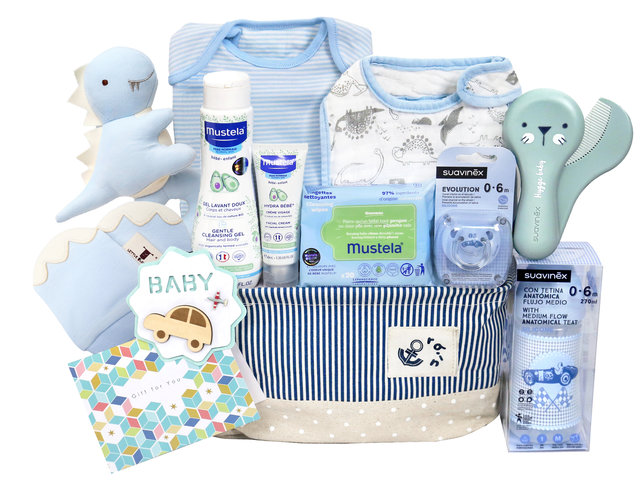
1. Macro Industry Background & Market Opportunity Analysis
In the global consumer market, the Baby & Toddler industry is undergoing a profound structural transformation. The shift from growth driven by raw traffic to refined operations focused on Customer Lifetime Value (CLV) has become an irreversible trend for DTC (Direct-to-Consumer) brands. Specifically for the Baby Gift Sets niche, its high average order value (AOV), strong social attributes, and "one-time purchase" characteristics pose unique challenges and opportunities for building a Loyalty Program.
1.1 Global Growth Logic of the Baby Gift Market
According to Gizmospring's "Baby Industry Report 2024-2030," the U.S. baby product market reached $34.2 billion in 2023 and is projected to expand at a Compound Annual Growth Rate (CAGR) of 3.9%, potentially exceeding $44 billion by 2030.1 This steady growth is driven not just by birth rates, but significantly by upgraded consumption concepts and increased parenting investment.
Data analysis shows a significant shift in consumer preference toward Premiumization and Utility-driven products. Modern parents, particularly Millennials and Gen Z, show high uncompromising standards in parenting consumption. Their heightened awareness of infant health has surged demand for non-toxic, organic, and eco-friendly materials.1 In the gift set category, this trend is amplified—a gift set is not just a product bundle but a symbol of the giver's taste and social status. Thus, premium gift sets containing organic cotton clothing, natural skincare, or educational toys command a market premium far above ordinary single items.
However, as the market grows, competition becomes increasingly crowded. DTC brands face channel pressure from traditional giants like Johnson's and Pampers, as well as challenges from countless emerging DTC Brand fastgrowing competitors. These new brands often pass the cold-start phase quickly through precise social media marketing and unique aesthetics but subsequently face a severe "retention wall." Data indicates that e-commerce Customer Acquisition Cost (CAC) has doubled in recent years, while the cost to retain an existing customer is only one-fifth of acquiring a new one.2 For the gift category, failing to convert traffic acquired through ads or social virality into high-repeat loyal members means profit margins will be eroded by rising traffic costs.
1.2 Category Specificity: Separation of Shopper and Consumer
To design an effective loyalty solution, one must understand the core commercial pain point of the Baby Gift Sets category: the identity separation between the Purchaser (Shopper) and the User (Consumer). This largely renders traditional membership systems ineffective.
In the consumption scenario of baby gift sets, up to 60% of purchasing behavior comes not from parents, but from grandparents, relatives, friends, or colleagues.3 Research by Giraffe Insights indicates that in markets valuing family ties like Italy, grandparents contribute 43% of children's gift purchases.3 This reveals a harsh reality: the "customer" a brand spends heavily to acquire may merely be a one-time gift giver.
Gift givers exhibit distinct "low frequency, high AOV" attributes. They may only need to buy a newborn gift set once a year, and their loyalty is built on "logistics speed," "packaging aesthetics," and "social signaling" rather than product usage experience. Once the gift is sent, the connection between the brand and the giver often ends. Meanwhile, the true High-CLV (High Customer Lifetime Value) users—the parents receiving the gift—remain outside the brand's membership system because they did not participate in the purchase. They are "invisible users." If a brand cannot capture this group, it loses the opportunity for sustained repeat purchases of diapers, baby food, clothing, and toys over the next 3-5 years. Giftnote data supports this: 74% of gift recipients are "Net-new customers," yet most brands fail to effectively retain this traffic.4
1.3 Tech-Driven Retention Transformation
Facing these challenges, relying solely on traditional "spend-to-earn" models is unsustainable. The loyalty battlefield of 2026 will shift to AI customer retention. Research by Replenit shows that baby brands utilizing AI-driven retention strategies can boost repeat purchase rates by 25%.5 AI technology not only helps brands accurately predict a baby's developmental stages to push the right products at the right time but also uses intelligent data analysis to identify and separate gift givers from recipients, customizing differentiated loyalty paths. For example, for gift givers, AI can recommend age-appropriate gift lists to solve "decision paralysis"; for recipients, AI can provide parenting advice and milestone product recommendations, establishing deep emotional connections.
2. Deep Consumer Behavior Insights & Loyalty Pain Points
Designing an effective loyalty solution requires granular deconstruction of the target audience's psychology and behavior. In the Baby Gift Sets category, we deal with two distinct psychological accounts: gift givers consuming out of social obligation or affection, and new parents entangled in "parenting anxiety" and "growth joy."
2.1 New Parents: Born-again Consumers
Elina Furman refers to new parents as "Born-again Consumers".6 This means that the moment a child is born, their past spending habits, brand preferences, and even lifestyles are completely reshaped. This reshaping offers brands a very short but highly valuable "window of opportunity."
2.1.1 Trust is the Only Currency
For this group, Trust transcends price as the primary factor. Lacking experience, new parents often feel overwhelmed by massive amounts of product information. They heavily rely on "Social Proof," such as expert endorsements, KOL recommendations, and real user reviews. Once a brand wins their trust regarding Safety and quality, loyalty becomes extremely solid because they lack the time or willingness to risk trying new brands. Studies show that when parents trust a brand, they won't waste limited free time looking for alternatives.6
2.1.2 The "Gap Crisis" of Growth Speed
Infant growth speed is astonishing, constituting the biggest barrier to repeat purchases. A Newborn size onesie may only fit for a month; a pacifier for a 3-month-old loses appeal by 6 months. This rapid iteration means the lifecycle of a single product is extremely short. If a brand's SKU width is insufficient, or the Loyalty Program cannot keep up with the baby's growth rhythm, customer churn is inevitable. For instance, Lovevery's success lies in solving "toy obsolescence" through a subscription model, turning durable goods into a service.7
2.1.3 Emotional Connection & Community Belonging
Modern parenting is often accompanied by loneliness and anxiety. Parents crave not just products, but confirmation that "I am not alone on this journey." Successful DTC brands often build sticky communities by providing parenting knowledge, expert Q&A, or simply emotional resonance. This Emotional Loyalty is more effective than simple discounts in defending against price wars.
2.2 Gift Givers: Pain Points & Opportunities
Unlike parents, the decision-making of gift givers is more "task-oriented."
2.2.1 Decision Paralysis
Gift givers usually face two problems: "Not knowing what is appropriate" (especially for non-immediate family, they may not know the baby's specific age or parents' preferences) and "Fear of duplicate gifts." This leads them to prefer standardized Gift Sets or Gift Cards. Glimpse trend data shows continued growth in search volume for "Baby Gift Sets," reflecting this demand for convenient solutions.7
2.2.2 Price Sensitivity & Social Signaling
While gift givers are willing to pay a premium, they are sensitive to Price Brackets. Typically, $50-$100 is a common budget range. If a brand can offer a gift set within this range that has excellent packaging and high perceived value, conversion rates soar. Additionally, gift givers value the Unboxing Experience highly, as it is the carrier of their emotional transmission.
2.3 Major Pain Points of Existing Loyalty Programs
Pain Point Dimension | Manifestation | Data/Phenomenon Support |
Misaligned Incentives | Points are awarded to gift givers who don't need baby products (e.g., colleagues), while parents needing repeat purchases get zero incentives. | 60% of gift purchasers are not the parents.3 |
Lack of Personalization | Whether the baby is a newborn or a toddler, marketing emails are generic promotions lacking relevance. | Consumers expect brands to predict needs, not blindly sell. |
High Redemption Threshold | Traditional "Spend $1 get 1 point, 500 points for $5" models are unattractive to low-frequency gift buyers. | 2026 trends show a preference for "Instant Gratification".8 |
Data Silos | Data from offline or third-party (Amazon) purchases doesn't flow back to the brand's private domain, leading to low program coverage. | Brands lose access to data for users acquired via omnichannel.9 |
3. Deep Dive into Top Brand Loyalty Success Cases
In a fierce market, brands like Lovevery, Maisonette, Monica + Andy, and Cuddle+Kind have successfully broken through via innovative business models and loyalty designs.
3.1 Lovevery: Reconstructing Loyalty Logic with "Subscription + Content"
Lovevery is a textbook DTC case. By transforming durable goods (toys) into a subscription service (SaaS-like model), it solved the repeat purchase problem.
- Core Mechanism: Age-based Subscription
Lovevery's core product is Play Kits, shipped every two months (0-12 months) or three months (1-4 years). This model cleverly leverages "parenting anxiety"—fear of buying the wrong toys or missing developmental windows. Lovevery tells parents: "We have curated the most suitable toys based on neuroscience for this exact moment.".7 - Loyalty Highlight: Content as a Service
Every box includes a detailed Play Guide, teaching parents how to use the toys for early education. This content service drastically increases switching costs. Once users are accustomed to this "foolproof" high-quality parenting support, they rarely cancel. This is deep loyalty based on Knowledge Dependency.10 - Innovative Practice: Subscriber Shop
Lovevery established a closed shop exclusively for subscribers. Here, members can buy individual items, refill packs, or replacement parts not available to the public. This Exclusivity not only confers status but solves the practical pain point of "lost parts," further boosting LTV.11 - Data Validation: This model achieved over $100 million in recurring revenue, with email open rates of 40%, far exceeding the industry average.12
3.2 Maisonette: Aggregator Platform's "Dual Incentives" & KOC Ecosystem
As a premium aggregator, Maisonette lacks the cost advantage of own-supply chains, so it innovates in brand and channel power.
- Core Mechanism: Fam-bassadors Program
Instead of a traditional Affiliate model, Maisonette built a "Fam-bassadors" KOC system. It selects mothers with aesthetic influence, granting them 15% sales commission and a 15% personal lifetime discount. - Deep Analysis: This dual incentive is brilliant. The 15% personal discount ensures these high-net-worth moms remain loyal consumers (for self-use + gifting), while the commission motivates them to spread the word. This turns the Loyalty Program into a decentralized sales network.13
- Referral Mechanism: Give 20%, Get 20%
Maisonette offers aggressive dual-sided rewards. For high-ticket gift sets, a 20% discount is enough to sway a gift giver's decision. This "Altruism + Self-interest" design is a classic tactic for lowering CAC via social virality.4
3.3 Cuddle+Kind: Mission-Driven Emotional Loyalty
Cuddle+Kind proves that in a homogeneous plush toy market, Brand Purpose is the strongest moat.
- Core Mechanism: 1 Doll = 10 Meals
The brand promises to donate 10 meals to hungry children for every doll sold. This clear, powerful value proposition strikes the empathy of parents and gift givers alike. - Loyalty Highlight: Charity Options in Kind Rewards
In their point system, users can choose to redeem points not just for discounts, but to donate more meals. - Deep Analysis: This is high-level Loyalty design. For high-net-worth users who don't need a $5 discount, the Psychological Reward of charity far outweighs monetary incentives. It significantly strengthens the emotional bond.14
- VIP Tiers:
To retain big spenders, they set clear VIP thresholds (e.g., spend $500). VIPs enjoy "Double Point Days" and "Birthday Perks." Traditional tier designs remain effective for "Super Supporters" as status validation.14
3.4 Monica + Andy: Experience-Driven & Intangible Benefits
As an organic cotton clothing brand, Monica + Andy focuses on offline experience and value-added services.
- Core Mechanism: M+A Rewards
Simple 5% Cashback logic reduces user understanding costs. - Loyalty Highlight: Unlimited Free Embroidery
This is the "killer app" for the gift category. Personalization (like embroidering a baby's name) usually costs extra, but Monica + Andy offers it free to members. - Deep Analysis: Embroidery has low marginal cost but high Perceived Value for gift givers. This strategy effectively converts one-time gift shoppers into registered members, as registration is required to unlock the free service.15
4. 2026 Baby Gift Sets Category Loyalty Solutions (Based on RIJOY AI)
Combining market insights and benchmarks, we propose a full-lifecycle loyalty solution based on the RIJOY AI architecture for 2026. This scheme uses AI to solve "Data Gaps" and "Low Repurchase" rates, smoothing the evolution from Startup to Mature phases.
4.1 Core Strategy: AI-Driven Milestone Companionship
Future Loyalty Programs shouldn't just be point accounts, but Intelligent Parenting Assistants. Leveraging RIJOY AI's data analysis and automation, brands can build a communication timeline synchronized with the baby's growth trajectory based on due dates or birthdays.
4.2 Phase 1: Start-up Brand — Building Trust & Data Infrastructure
For startups, the goal is Survival and Acquisition. Loyalty focus is not complex tiers, but low-cost trust acquisition and key data (Email + Due Date).
- RIJOY Configuration Strategy:
- Rapid Launch (2-Minute Setup): Use RIJOY's AI Sidekick to configure basic point rules via natural language. E.g., "I want to reward new user registration and social follows." AI auto-generates optimal point ratios.16
- Trust Asset Accumulation (Points for Social Proof):
- Action: Set high rewards for "Photo Reviews" and "Video Reviews." E.g., 10 points for text, 100 for photos.
- Rationale: Startups lack brand power; authentic buyer shows are key to conversion. RIJOY automatically verifies reviews and issues points.17
- Data Capture Hook:
- Action: On checkout or Thank You Page, use RIJOY pop-ups: "Want precise parenting tips? Tell us baby's birthday/due date."
- Reward: Input date = 50 points. This data is the cornerstone of all subsequent automated marketing.18
4.3 Phase 2: Growth Brand — Refined Operations & LTV Excavation
Once a brand has a user base, the challenge shifts to differentiating gift givers from parents and boosting LTV.
- RIJOY Configuration Strategy:
- Dual-Track Referral Program:
- Action: Use RIJOY to set "Give $20, Get $20" cash coupons. For high-ticket sets, direct cash off is more attractive than percentages.
- AI Insight: RIJOY analytics identify "Super Referrers" (KOCs). Invite top 1% users to an "Invisible VIP Tier" manually, giving higher commissions similar to Maisonette's Fam-bassadors.13
- Automated Milestone Marketing:
- Scenario: User A bought a newborn gift set 3 months ago.
- AI Trigger: System predicts baby is entering "Teething" or "Solids" phase.
- Action: Auto-trigger email/SMS: "Is baby drooling? Here is our member-exclusive teether & bib set. Double points for 48h." Predictive Marketing converts far better than generic blasts.19
- VIP Tiered System:
- Action: Bronze / Silver / Gold tiers.
- Key Benefit: Gold members get "Free Gift Wrapping" and "Priority Shipping." Highly attractive to middle-class parents sending gifts frequently.20
4.4 Phase 3: Mature Brand — Ecosystem Building & Emotional Loyalty
Mature brands face stock market battles and must build moats against price wars.
- RIJOY Configuration Strategy:
- Points Ecosystem (Coalition Loyalty):
- Strategy: Allow points redemption for non-brand products/services. E.g., partner with online early education apps, children's book subscriptions, or Starbucks.
- Implementation: Use RIJOY API for cross-platform redemption. Solves the "Baby grew up, don't need bibs, what to do with points?" issue, extending lifecycle.21
- Predictive Churn Prevention:
- AI Analysis: RIJOY AI monitors interaction frequency. If a high-value member stops interacting beyond the average cycle, AI flags "Churn Risk."
- Auto-Action: Trigger Win-back Campaign with sincere offers (e.g., no-threshold coupon or new product trial) to salvage the user.16
- Emotional Rewards:
- Strategy: Introduce charity options (Cuddle+Kind style) or exclusive offline events (Expert meetups). Use RIJOY POS integration to record offline interactions.22
5. Key Execution Strategy: Bridging the "Giver-Receiver" Gap
This is the trickiest, category-specific problem. We suggest specific tactics to close this gap.
5.1 Digital Gift Note
Traditional paper cards are data dead-ends; digital cards are data starting points.
- Mechanism: At checkout, the giver enters the recipient's email/phone.
- Experience: When the physical gift arrives (or before), the recipient gets an animated email: "A gift from [Name]!"
- Conversion: Clicking "Unwrap" leads to the brand site, showing the gift content and a "New Mom Perk Pack" (e.g., Digital 0-1 Year Guide, 20% off first order, extended warranty). Registration is required to claim.
- Effect: Directly captures high-value potential repeat users (recipients) and screens for brand interest.4
5.2 "Smart Warranty" & Product Registration
For functional gift sets (e.g., pumps, warmers, high-end toys), product registration is excellent for data capture.
- Mechanism: Include a prominent card in the box: "Scan QR to activate 1-year extended warranty & join VIP Club."
- Tech: Use Neurowarranty or similar for unique QR codes.
- Data Value: Registration collects contact info and baby's birth date, immediately placing this "invisible user" into the milestone marketing track.9
5.3 Gift Card Incentives
For givers who rely on Gift Cards.
- Strategy: Reward the Giver with points for buying cards (points for self-use or generic gifts).
- Loop: When the Recipient uses the card, force account registration. The brand pleases the giver and acquires the recipient's data.25
6. 2026 & Future Trend Outlook
6.1 AI Agent: From "Support" to "Super Guide"
With LLM evolution, future Loyalty entry points won't be static pages, but conversational AI Agents.
- Scenario: User tells AI: "Friend giving birth next week, $100 budget, gender unknown."
- Response: RIJOY AI Agent recommends a neutral best-seller and upsells loyalty: "As a Silver member, you get free custom embroidery on this set + a $20 return coupon for your friend. Shall I place the order?".26
6.2 Emotional Computing (Emotional AI)
By 2026, AI will recognize emotions. Analyzing chat tone or browsing behavior (e.g., late-night refreshing) can indicate parental anxiety.
- Strategy: System pauses promo ads and sends a care email with a lullaby playlist or sleep expert articles. This Empathy-based interaction builds profound trust.22
6.3 Sustainability & Recommerce
As eco-consciousness rises, brand-owned Recommerce becomes part of Loyalty.
- Mechanism: Members return outgrown clothes for points. This solves disposal pain points, drives new purchases with points, and reinforces the brand's eco-image.28
7. Conclusion
For DTC brands in the Baby Gift Sets track, future competition is no longer just about traffic, but deep mining of Family Lifetime Value.
By implementing the solutions in this report, brands can effectively break the data barrier between "Giver" and "Receiver," utilizing RIJOY AI for automated milestone marketing. From building trust in the startup phase to constructing ecosystems and emotional connections in mature phases, every step aims to transform one-time transactions into long-term companionship.
Actionable Next Steps:
- Data Audit: Check checkout flows to ensure "Gift Message" or "Shipping Address" logic helps distinguish gift orders.
- Tool Deployment: Introduce RIJOY or similar AI Loyalty tools; prioritize "Photo Review Rewards" and "Birthday/Due Date Capture."
- Content Prep: Start accumulating parenting content (articles, videos) matching product lifecycles—this is the core asset of future membership systems.
References
- 1 Gizmospring. (2024). Baby Industry Report 2024-2030.
- 2 Stryde. 5 Tips to Increase Customer Retention & Lifetime Value for Your Baby Brand.
- 3 Giraffe Insights. (2021). Taking Stock: International Kids Gifting Behaviours.
- 4 Giftnote. Peak Season Gifting Playbook: Turning Gifters into Customers.
- 5 Replenit. (2025). Mother & Baby Repeat Purchases and AI Retention.
- 6 Medium. How to Improve Customer Retention in Ecommerce: A Lesson from the Baby Products Industry.
- 7 Glimpse. (2025). Baby Trends: Growth of Subscription Models.
- 8 Tada. How 2025 Loyalty Trends Are Shaping What's Coming in 2026.
- 9 Brij. How Brands Can Simplify Product Registration.
- 10 Airboxr. How Lovevery Uses Customer Segmentation to Cultivate an Informed Consumer Base.
- 11 Lovevery. Subscriber Shop Details.
- 12 Recharge. Science-Backed Strategy with Lovevery.
- 13 Maisonette. Fam-bassadors Program.
- 14 Cuddle+Kind. Kind Rewards & FAQ.
- 15 Monica + Andy. Loyalty Program Terms & Conditions.
- 16 RIJOY AI. Platform Overview & Features.
- 17 RIJOY AI. Baby and Toddler Loyalty Solutions.
- 18 Yotpo. Creating Birthday Reward Rules.
- 19 Revuze. Customer Behavior Prediction AI Strategies.
- 20 Rivo. Best Loyalty Programs for DTC Brands.
- 21 Nector. Loyalty Program Models for DTC Brands.
- 22 Netguru. The New Rules of Customer Loyalty 2026.
- 23 Nebulab. Gifting Experience for DTC E-commerce.
- 24 Neurowarranty. Warranty Registration for R for Rabbit.
- 25 AdRoll. Ways to Connect with Gift Giver and Receiver.
- 26 Forbes. Why Brands That Value Customer Loyalty Will Fire Their AI-Only Strategies in 2026.
- 27 Antavo. AI in Loyalty Programs.
- 28 Capgemini. Consumer Trends 2026: AI and Value Perception.
- 29 Maisonette. Company Mission & Content Strategy.